
Introduction
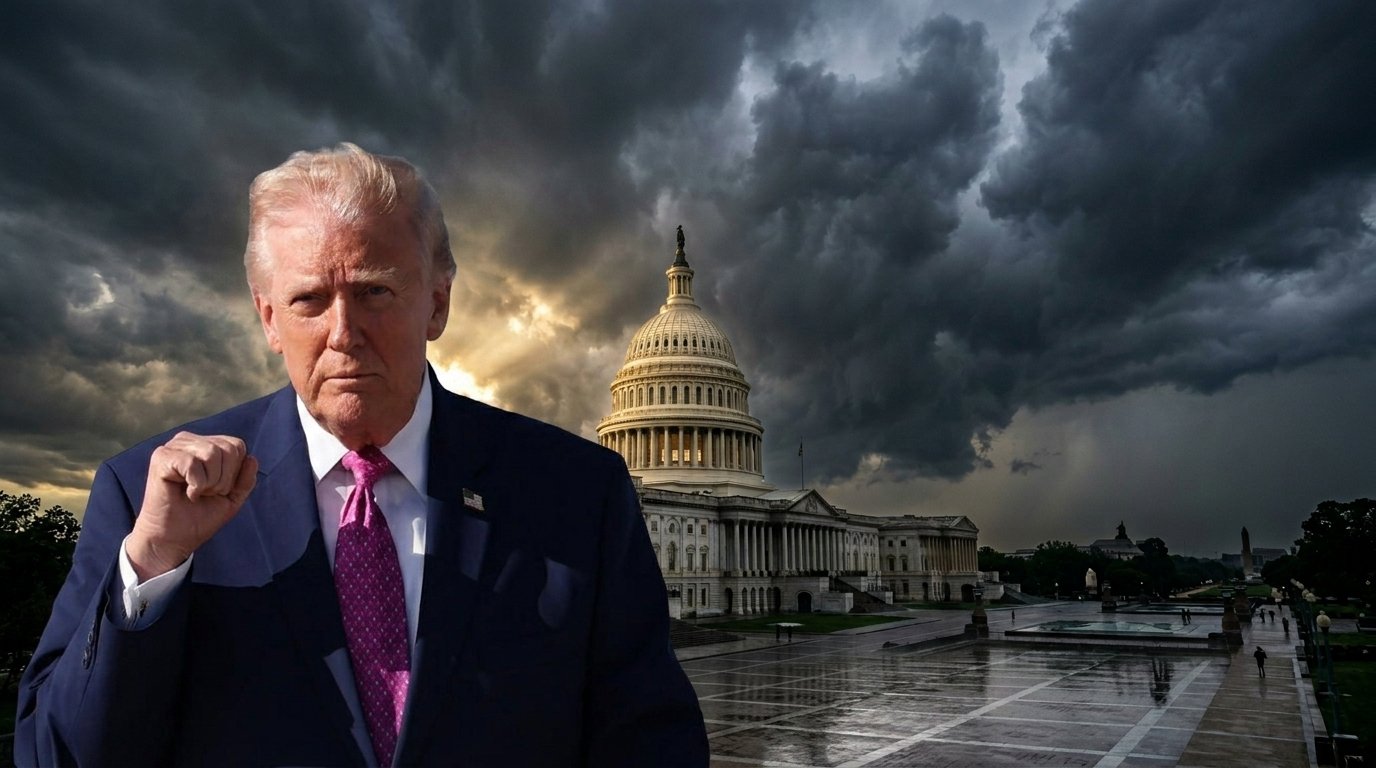
As the 2026 midterm elections approach, Washington is witnessing one of the most consequential tests of the relationship between the executive and legislative branches in recent memory. President Donald Trump’s second term has been marked by an unusually assertive approach to congressional relations, and in recent months that dynamic has produced visible friction even within his own party. What was once described as an airtight alliance between a Republican White House and a Republican-controlled Congress has shown real signs of strain, with implications for major legislation, national security policy, and the upcoming election cycle.
This article breaks down the key flashpoints currently defining the relationship between President Trump and Congress, the legislative priorities at stake, and what the unfolding power struggle could mean heading into November.
The Housing Bill Standoff
One of the more striking recent episodes involved a major piece of bipartisan legislation: the 21st Century ROAD to Housing Act, aimed at addressing the affordability crisis facing renters and prospective homeowners nationwide. The bill passed Congress with overwhelming bipartisan support, clearing the Senate 85-5 and the House 358-32, after months of negotiation between Democrats and Republicans. MS NOW
Despite that rare show of bipartisan cooperation, Trump abruptly canceled plans to sign the bill and instead urged Republicans to first pass his election overhaul legislation. He later dismissed the housing bill in a social media post as being of comparatively minor importance next to lowering interest rates. The episode drew sharp criticism from lawmakers who had worked across the aisle to get the legislation passed, and it became a flashpoint illustrating the president’s willingness to leverage even popular, bipartisan wins to advance his own legislative priorities. NBC NewsMS NOW
The SAVE America Act and Election Overhaul Push
At the center of much of the current tension is Trump’s push for the SAVE America Act, legislation that would require voters to present additional identification and proof of citizenship in order to cast ballots. Trump has become almost singularly focused on this legislation, even as it has almost no realistic chance of passing in its current form. NBC NewsPBS
In March, Trump vowed not to sign any legislation until Congress passed the SAVE America Act, though he has since signed 22 other bills into law. He has pressured Senate Majority Leader John Thune relentlessly to eliminate the filibuster in order to force the bill through, but Thune has told him both publicly and privately that the votes simply are not there. In a notable show of frustration, Trump said on social media that he would be “the last Republican president” if the voting legislation failed to pass. PBS + 2
In the House, Rep. Anna Paulina Luna has led a group of Republicans in blocking any legislation from coming to a vote until the election overhaul bill advances, prompting GOP leadership to cancel scheduled votes. Following a White House meeting, Speaker Mike Johnson said he and Trump were “on exactly the same page” in working to break the resulting legislative impasse. NBC NewsNBC News
Cracks in the Republican Coalition
Perhaps the most striking development of 2026 has been the public emergence of Republican criticism of the president — a rarity earlier in his term. As the November midterms approach and Republicans work to defend their congressional majorities, several GOP senators have begun disparaging Trump’s actions publicly for the first time. PBS
Senator Thom Tillis of North Carolina remarked after a stalled intelligence nomination that “somebody’s not dialing the president into the complexities of what he’s done here.” Perhaps most pointedly, Senator Bill Cassidy of Louisiana said in a televised interview that Trump occasionally treats Congress as “merely an appendage,” emphasizing that the Senate is a body separate from the presidency. Cassidy, who voted to convict Trump after the January 6 Capitol attack, did not advance past his own primary this year following years of political fallout from that vote. PBS + 2
Tensions escalated further over a proposed $1.776 billion “anti-weaponization” fund that critics noted could, by the administration’s own admission, compensate individuals who assaulted police during the Capitol riot. Senate Republicans pushed back on the fund with unusually blunt language, calling it “stupid on stilts” and “morally wrong,” before leaving town with Trump’s immigration enforcement bill left in limbo over the dispute. CNNCNN
National Security and the FISA Lapse
Beyond domestic policy disputes, Congress also faced a significant national security deadline in 2026 involving the reauthorization of a key surveillance authority. The House failed to pass a short-term extension of FISA Section 702 — which allows the government to conduct surveillance on foreign nationals for counterterrorism purposes without a warrant — after Democrats blocked the fast-tracked measure, allowing the program to lapse for the first time since 2008. NBC News
House Democrats tied their opposition in part to concerns over Trump’s appointment of Bill Pulte, a housing official with no national security background, as acting director of national intelligence. Trump subsequently announced he would nominate Jay Clayton, the U.S. attorney for the Southern District of New York, for the role on a permanent basis. That nomination, too, faced delays as Republican frustration over the anti-weaponization fund made some senators less willing to quickly confirm Trump’s preferred nominees. NBC News + 2
Reconciliation and Spending Fights
Trump has also turned to budget reconciliation — a legislative process that allows certain bills to pass the Senate with a simple majority rather than the 60 votes typically required — to advance his priorities without needing Democratic support. He signed a $70 billion reconciliation bill funding ICE and Border Patrol operations through the end of his term, and on the same day demanded Congress pass an additional $350 billion reconciliation package — which he dubbed “Recon 3.0” — that would also fold in the SAVE America Act. In a Truth Social post, Trump told congressional Republicans to advance the measure “IMMEDIATELY,” writing, “No games, no delays, and no weak compromises!” NBC NewsNBC News
The Bigger Picture: Executive Power and Institutional Tension
Some of this year’s friction reflects a broader, longer-running dynamic in Trump’s second term concerning the balance of power between the presidency and Congress. Analysts have noted that the administration has accelerated the expansion of executive power at the legislative branch’s expense, raising broader concerns about institutional checks and balances. One notable flashpoint came after Trump launched military action against Iran without first seeking congressional authorization, prompting senators to introduce a War Powers resolution intended to reassert Congress’s constitutional role in approving military action. The Washington PostThe Washington Post
Despite plunging approval ratings and polling that increasingly shows Democrats favored to win sizable gains in the 2026 midterms, Trump has continued pressing forward with politically contested priorities, including the Iran war, a costly White House ballroom project, and the anti-weaponization fund. He has also waded into contested primary races, including endorsing a Texas Senate candidate widely seen as risky for Republican prospects in that race. CNNCNN
What This Means Heading Into the Midterms
The growing friction between Trump and congressional Republicans arrives at a politically sensitive moment. Senate Majority Leader John Thune has acknowledged the real rift between the White House and the congressional GOP, and even Trump himself did not dispute the premise that he may be losing some control over Senate Republicans. With Republican lawmakers facing reelection in a climate of uncertain approval ratings, the coming months are likely to test whether the party continues to align closely with the president’s agenda or whether more lawmakers begin charting a more independent course — particularly on issues like election law, surveillance authority, and spending priorities where bipartisan cooperation has historically been more achievable. CNN
For voters trying to follow the unfolding story, the key dynamics to watch include whether the SAVE America Act advances in any form, how the FISA surveillance lapse gets resolved, the fate of the national intelligence director nomination, and whether reconciliation efforts succeed in pushing through Trump’s broader legislative wish list before the midterms reshape the political map in Washington.
A Note on Sources and Ongoing Developments
This is a fast-moving story, and the details above reflect reporting as of late June 2026. Given the pace of developments in Washington, readers should consult current news coverage for the very latest updates on any of these legislative battles.







Leave a Reply